Broccoli Is Good Stuff (recipe)

Italian Style Broccoli

Broccoli, native to the Mediterranean, is both delicious and nutritious when properly cooked. It contains more protein than most other vegetables and is easy to prepare. Eat it either raw or cooked.  To cook – gentle steaming is healthiest.

Developed from wild cabbage, selective breeding during the Roman Empire produced Broccoli (Brassica oleracea var. italic).  It then appeared in France at about 1560, and was introduced in England and America in the 1700s.

Broccoli contains phytonutrients that aid in disease prevention; its Vitamin K and Choline can promote improved brain function.  Recent research has also shown that eating Broccoli can even boost metabolism by activating brown fat cells (that contain extra fat burning mitochondria).

Consuming Broccoli can help to:

  1. protect against some cancers
  2. fight against flu-causing viruses
  3. maintain: skin, eyesight, healthy immune system, brain function
  4. support: oral health, healthy bones and joints
  5. may slow/prevent:  mental health decline, aging process, macular degeneration, neural tube defects.

To get the most health benefit from Broccoli choose stalks with tightly budded heads, crisp leaves and are deep green in color.  Do not select portions that are limp/wilting or turning yellow.

Be sure to keep the Broccoli dry; store it for up to 3 days in the crisper drawer of the refrigerator. Raw broccoli is low in calories and almost 90% water, 7% carbs, 3% protein and contains Omega-3s. One (1) cup of raw broccoli, 91 grams contains:

  • Calories: 31
  • Protein: 2.5 grams
  • Carbs: 6 grams
  • Sugar: 1.5 grams
  • Fiber: 2.4 grams
  • Fat: 0.4 grams.

NOTE: Consuming broccoli may interfere with blood-thinning medications. Consult with your healthcare provider, if this is the case.

Here is a Broccoli side dish recipe that is easy to prepare.  Even the broccoli hater in our house liked it!

BroccoliBlog

Italian-Style Broccoli

Broccoli, Italian Style

Prep time: 15 minutes; Cook time: 25 minutes; Servings: 6

Ingredients

  • 8 Cups Broccoli, florets
  • 4 tsp. Garlic, chopped
  • Olive Oil, extra virgin
  • Sea Salt, to taste
  • Ground Black Pepper, to taste
  • 1 tsp Lemon Pepper
  • 2 Tsp Lemon juice
  • ½ Cup Parmesan cheese, grated

Directions

  1. Preheat oven to 425 oF.
  2. After washing, pat Broccoli dry as possible with paper towel for cooking purposes.
  3. Place Broccoli florets in a large bowl and toss with: 4 teaspoons of chopped garlic, 1 teaspoon of Lemon Pepper, ~ 1/3 Cup olive oil.
  4. Add salt and ground black pepper to taste.
  5. Place Broccoli/Garlic mixture on a flat baking pan; evenly disperse it across the pan.
  6. Roast it in the preheated oven (425oF) for ~ 15 minutes.
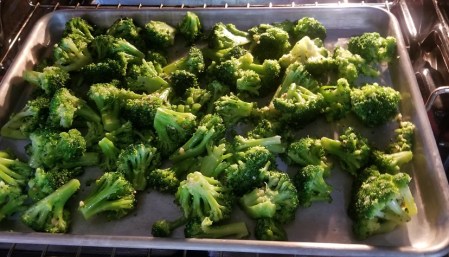
    Broccoli_OvenReady

    Sheet pan of broccoli, oven-ready

  7. Now, use a spatula to turn Broccoli over to ensure even roasting.
  8. Roast for another 10 minutes. The Broccoli florets will be crispy on the outside when done.
  9. Remove Broccoli from the oven and place in bowl.
  10. Toss the Broccoli with: 2 to 3 Tablespoons Olive Oil, and 2 Tablespoons Lemon juice.
  11. Sprinkle with ½ Cup Parmesan cheese. Serve.
Plan Your Meal

Get the Right Balance of Carbs, Protein and Fat

A balanced diet is basic to a healthful and wholesome life.  Consuming an appropriate balance of calories and nutrients helps keep you healthy.  For purposes of meal preparation, allocate / apportion the  recommended daily percentage of carbohydrates, proteins and fats.

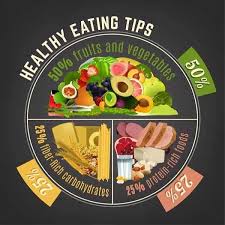
According to the USDA (United States Department of Agriculture) one should eat foods from the different food groups to create a “Balanced Plate”:

50% fruits and vegetables

25% fiber rich carbohydrate

25% protein rich foods  

also drink water

When making adjustments to your diet, do not try to modify everything all at once.  Just concentrate on making one small improvement at a time.  When you have succeeded with one, go on to the next change.  Remember:

  • Carbohydrates supply the energy needed during the early stages of exercise.
  • Calories from fat provide energy when the exercise becomes extended (after carbohydrates are used up).
  • Protein is required for building muscle.
  • Carbohydrates and protein contain four calories per gram.
  • Fats contain nine calories per gram.

Based on a 2,000-calorie diet, consume:

  • 1,200 calories from carbohydrates (300 grams)
  • 400 calories from protein (100 grams)
  • 400 calories from fats (44 to 45 grams).

Too much protein can be unhealthy though.  Talk to your doctor before increasing protein intake.

5 Yummy & Healthy Foods

Lots of foods taste good.  Here are 5 foods that taste good and are especially healthy, too.

1. Blueberries – contain antioxidants and polyphenols, keeping your heart healthy.

  • You can help lower blood pressure and increase your HDL (the good cholesterol) by eating a cup of blueberries/mixed berries every day for 8 weeks.
  • Add in strawberries and red raspberries too.

2. Watermelon (red) – is an excellent source of vitamin C.

  • Also contains lycopene which is an antioxidant, helping to protect against heart disease and some cancers. An added benefit is watermelon’s high water content that keeps you feeling full and satisfied.
  • More healthy fruits and berries include cherries, grapes, grapefruit, kiwifruit, lemons, mango, melons, olives, peaches, pears, pineapples and plums.

3. Tomatoes – is it vegetable or fruit?

  • Tomatoes have lots of nutrients: fiber, potassium, vitamin C, folate, and choline, all of which are heart healthy.  Potassium is also beneficial to muscles and bones.
  • Tomatoes are usually categorized as a vegetable, although botanically speaking they are fruits.
  • As an aside, other fruits that are often considered vegetables include cucumber, squash, pea pods, peppers, eggplant and okra.

4.  Green Beans – are high in fiber, helping to prevent weight gain.

  • Increasing fiber by 8 grams for every 1,000 calories consumed in one’s diet can result in a weight loss of about 4.5 pounds and fiber helps to moderate blood pressure.
  • There are more than 130 varieties of green beans, all are a good source of protein, vitamins A, C, and K, and of folic acid and minerals (especially manganese).
  • Manganese, also an antioxidant, is essential to support metabolism, bone health and wound healing.
  • Other minerals in one cup of raw green beans are calcium, iron, magnesium, phosphorous, potassium, zinc.
  • Try okra and chickpeas too.  Calorie for calorie, vegetables offer a concentrated source of nutrients.
  • Rinse canned beans before eating to rid them of excess sodium used in packaging.
  • Fresh or frozen greens beans are the best choices for cooking.

5.  Salmon – is a type of oily fish that tastes good and offers a high amount of nutrients, including protein and omega-3 fatty acids.  Salmon fillets contain up to 30 percent oil, including omega-3 fatty acids. Salmon:

  • provides benefits to the heart, as well as the nervous system.
  • is low in saturated fat, helping to slow the accumulation of plaque in the arteries
  • contains some vitamin D, also.
  • Eat a 3.5 ounce serving of fatty fish (salmon, mackerel, herring, lake trout, sardines, anchovies or albacore tuna) at least 2 times per week.

Takeaway:  Eat a balanced diet that is varied and not centered on one specific type of food.

Quench Your Thirst – Use an Infuser Water Bottle

Enhance and refresh your drinking water, infuse it.  There are no added calories, excess sugar or artificial flavorings.

Put fruits, vegetables, spices, or other herbaceous plants in the infusion chamber of an Infuser Water Bottle, then fill bottle with cold, pure water.  Nutrients escape from the fruit/veggies directly into the water.  It is all natural.

You can create most any kind of flavored water you want. Also, drinking plenty of liquids can help with burning fat and may increase the rate of metabolism.

Remember:

  • If you infuse for 4 or more hours, remove fruit/veggies from the infusion chamber then store the infused water in the fridge for up to 3 days.
  • Verify that the bottle is BPA Free.
  • Do not overfill.
  • Hot liquids create pressure; allow hot liquids to cool first.

To make infused water:

Cucumbers, citrus fruits, melons, and mint will work to flavor the water immediately. It’s best to soak apples, cinnamon, ginger root and rosemary overnight in the refrigerator.

Some Ideas for Infused Water:

Cucumber + Lime + Strawberry + Mint

Lemon + Raspberry + Rosemary

Orange + Blueberry + Basil

Lime + Ginger root + Basil

Watermelon + Mint + Jalapeno

Lemon + Thyme

Orange + Hibiscus + Star anise

Orange + Cinnamon + Cardamom + Cloves

Pear + Fennel.

Stay happy, healthy … and hydrated!

What’s for Lunch: Shrimp Burgers

Perfect for a summer lunch, shrimp burgers are tasty and healthy, great barbeque fare.

Shrimp Burgers

Makes 4 servings

Ingredients

  • Olive Oil Mayonnaise or Greek Yogurt
  • Sweet Pickle Relish
  • 1 tsp. Seafood Seasoning
  • 1 lb. Shrimp, raw, size, peeled
  • 1 Egg, slightly beaten
  • 1 Tbsp. Garlic, minced
  • 3 Tbsp. Parsley, chopped
  • 3 Tbsp. Butter or Canola Oil
  • Whole wheat buns, toasted
  • 6 oz. Tomato slices
  • 4 Romaine or Bibb Lettuces leaves

Directions            

  1. Whisk together in a small bowl: 3 Tbsp. mayonnaise or Greek Yogurt, 2 Tbsp. relish, ¼  seafood seasoning.
  2. Place ½ lb. shrimp in a food processor; pulse until finely chopped.
    • Add 1 egg, 1 Tbsp. minced garlic, and ¾ tsp. seafood seasoning to food processor, combine by pulsing.
    • Transfer the mixture to a medium bowl.
    • Roughly chop remaining shrimp and add to the bowl.
    • Add 3 Tbsp. chopped Parsley; lightly stir to combine.
  1. Shape mixture into 4 patties.
  2. Melt 3 Tbsp. butter in large, skillet, med. heat.
    • Place patties in the heated skillet, cook 4 to 5 minutes until shrimp is done and edges of patties are crispy.
  1. Place a cooked patty on each bun half, top with 4 tsps. mayo or yogurt mixture, tomato slice, 1 lettuce leaf.  Top with other bun half.  Or serve with tomato and lettuce, no bun.

Nutrition – per serving: 404 calories w/ bun; 253 calories w/ no bun

Fat  21 g, Cholesterol  216 mg, Fiber  5 g, Protein  24 g, Carbohydrate  33 mg, Sodium  643 mg, Iron  3 mg, Calcium  259 mg.