Plan Your Meal

Get the Right Balance of Carbs, Protein and Fat

A balanced diet is basic to a healthful and wholesome life.  Consuming an appropriate balance of calories and nutrients helps keep you healthy.  For purposes of meal preparation, allocate / apportion the  recommended daily percentage of carbohydrates, proteins and fats.

According to the USDA (United States Department of Agriculture) one should eat foods from the different food groups to create a “Balanced Plate”:

50% fruits and vegetables

25% fiber rich carbohydrate
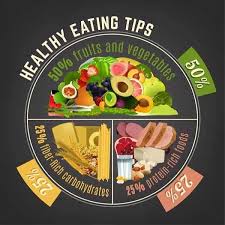
25% protein rich foods  

also drink water

When making adjustments to your diet, do not try to modify everything all at once.  Just concentrate on making one small improvement at a time.  When you have succeeded with one, go on to the next change.  Remember:

  • Carbohydrates supply the energy needed during the early stages of exercise.
  • Calories from fat provide energy when the exercise becomes extended (after carbohydrates are used up).
  • Protein is required for building muscle.
  • Carbohydrates and protein contain four calories per gram.
  • Fats contain nine calories per gram.

Based on a 2,000-calorie diet, consume:

  • 1,200 calories from carbohydrates (300 grams)
  • 400 calories from protein (100 grams)
  • 400 calories from fats (44 to 45 grams).

Too much protein can be unhealthy though.  Talk to your doctor before increasing protein intake.

5 Yummy & Healthy Foods

Lots of foods taste good.  Here are 5 foods that taste good and are especially healthy, too.

1. Blueberries – contain antioxidants and polyphenols, keeping your heart healthy.

  • You can help lower blood pressure and increase your HDL (the good cholesterol) by eating a cup of blueberries/mixed berries every day for 8 weeks.
  • Add in strawberries and red raspberries too.

2. Watermelon (red) – is an excellent source of vitamin C.

  • Also contains lycopene which is an antioxidant, helping to protect against heart disease and some cancers. An added benefit is watermelon’s high water content that keeps you feeling full and satisfied.
  • More healthy fruits and berries include cherries, grapes, grapefruit, kiwifruit, lemons, mango, melons, olives, peaches, pears, pineapples and plums.

3. Tomatoes – is it vegetable or fruit?

  • Tomatoes have lots of nutrients: fiber, potassium, vitamin C, folate, and choline, all of which are heart healthy.  Potassium is also beneficial to muscles and bones.
  • Tomatoes are usually categorized as a vegetable, although botanically speaking they are fruits.
  • As an aside, other fruits that are often considered vegetables include cucumber, squash, pea pods, peppers, eggplant and okra.

4.  Green Beans – are high in fiber, helping to prevent weight gain.

  • Increasing fiber by 8 grams for every 1,000 calories consumed in one’s diet can result in a weight loss of about 4.5 pounds and fiber helps to moderate blood pressure.
  • There are more than 130 varieties of green beans, all are a good source of protein, vitamins A, C, and K, and of folic acid and minerals (especially manganese).
  • Manganese, also an antioxidant, is essential to support metabolism, bone health and wound healing.
  • Other minerals in one cup of raw green beans are calcium, iron, magnesium, phosphorous, potassium, zinc.
  • Try okra and chickpeas too.  Calorie for calorie, vegetables offer a concentrated source of nutrients.
  • Rinse canned beans before eating to rid them of excess sodium used in packaging.
  • Fresh or frozen greens beans are the best choices for cooking.

5.  Salmon – is a type of oily fish that tastes good and offers a high amount of nutrients, including protein and omega-3 fatty acids.  Salmon fillets contain up to 30 percent oil, including omega-3 fatty acids. Salmon:

  • provides benefits to the heart, as well as the nervous system.
  • is low in saturated fat, helping to slow the accumulation of plaque in the arteries
  • contains some vitamin D, also.
  • Eat a 3.5 ounce serving of fatty fish (salmon, mackerel, herring, lake trout, sardines, anchovies or albacore tuna) at least 2 times per week.

Takeaway:  Eat a balanced diet that is varied and not centered on one specific type of food.